Do you always find yourself in situations wherein you stop, enter a deep state of thought, and then scratch your head in confusion? “Wait, what did I do yesterday?” “Where did I leave my keys and wallet?” “What was I doing before reading this blog about forgetfulness?”
When you are constantly forgetting your lunch, credit card due dates, work appointments, and a string of important events, it can be easy to assume the worst. The good news is, if you are experiencing memory loss in your 20s, the chances are small that your forgetfulness is due to a neurological problem.
What Causes Forgetfulness in Young People?
For a twenty-something-year-old living wild and free, memory slips are frustrating. What’s even more aggravating is when forgetfulness strikes too often and you forget a major life event like your birthday, which can trigger fears of emerging Alzheimer’s or dementia.
Before you panic, below are six treatable causes of forgetfulness among the youth.
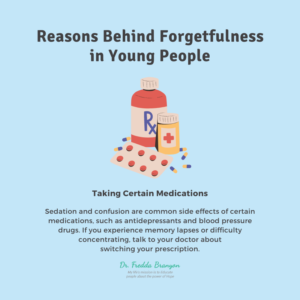
Sedation and confusion are common side effects of antidepressants, some drugs that control blood pressure, and a few other medications. If you are experiencing memory lapses or having difficulty concentrating, talk to your physician about changing your prescription.
3. Too Much Alcohol
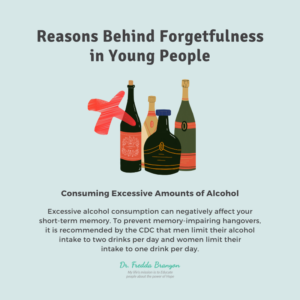
Going back to being young, wild, and free, drinking too much alcohol can impact your short-term memory. Prevent a memory-impairing hangover by following the CDC’s recommendation of two drinks a day for men and one drink per day for women.
4. Stress and Anxiety
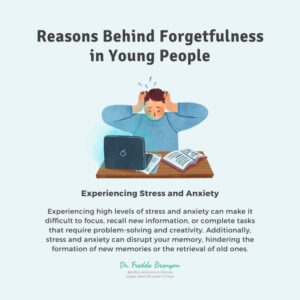
Suffering from high levels of stress and anxiety makes it challenging to concentrate, remember new information, or perform tasks that require logic and creativity. Likewise, stress and anxiety can interfere with your memory, blocking the formation of new memories or the retrieval of old ones.
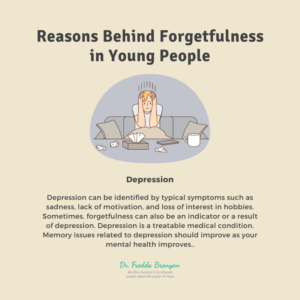
5. Depression
Sadness, lack of motivation, and loss of interest in the things or hobbies you enjoy are common signs of depression. Sometimes, forgetfulness is also an indicator or consequence of depression. This medical disorder is not permanent, and neither are depression-related memory slips. Your forgetfulness should dissipate once your mental health improves. Check out Ways to Fight Depression Without Medication for more information.
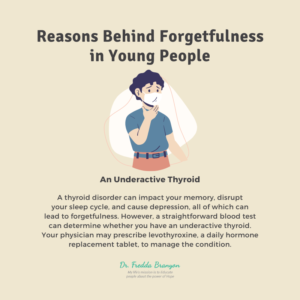
6. An Underactive Thyroid
Aside from affecting your memory, having a thyroid disorder can disturb your sleep cycle and trigger depression — all of which are causes of forgetfulness. On the bright side, a simple blood test can reveal if you have an underactive thyroid. Your doctor might prescribe a daily hormone replacement tablet called levothyroxine to manage the problem.
The Bottom Line
If you are experiencing frequent memory lapses and confusion, discuss your symptoms with a doctor to determine whether a controllable cause is the root of the problem. Getting good quality sleep, changing your medication, reducing your alcohol consumption, joining a stress reduction program, or speaking with a psychologist may help address your memory problems.
Many treatments fall under the umbrella of Complementary and Alternative Medicine or CAM. Some of the most commonly used CAM therapies include: Acupuncture Chiropractic Food counseling Herbalism Massa...
For many centuries, Thanksgiving has been considered a national holiday in the U.S. and Canada to celebrate the harvest and other blessings of the preceding year. The traditions behind it have evolved...
Polls in the United States and Europe revealed that half the population are more afraid of cancer than any other disease. Cancer is, after all, a life-altering event that can trigger a rollercoaster o...