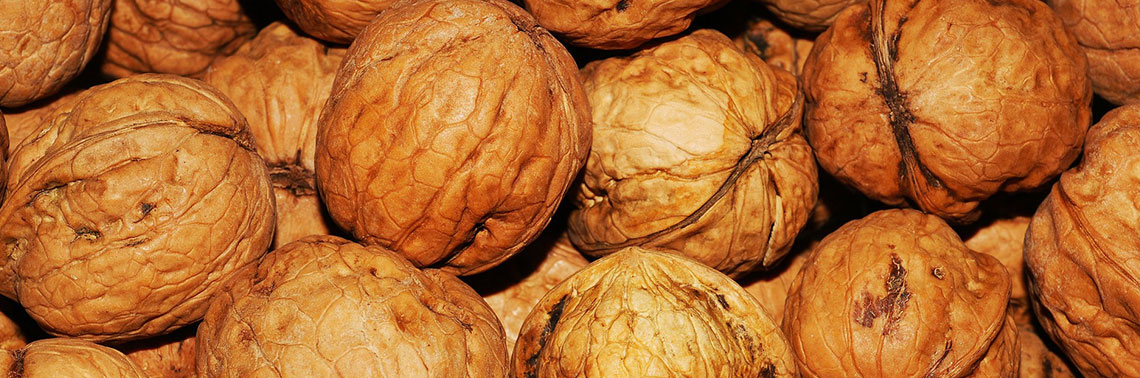
We all know that walnuts have been shown to have wide-ranging health benefits from our hearts to our risks of cancer. Now there is new research that sheds light on the mechanisms that might explain these benefits. Walnuts are full of health benefits as a rich source of antioxidants. They have been shown to lower cholesterol levels, keeping heart disease at bay and strengthening our brains.
What exactly is it about walnuts that make them so potent in the fight against disease? Researchers at the University of Illinois at Urbana-Champaign decided to uncover the hidden benefits under that rough shell. The results were published in The Journal of Nutrition. Hannah Holscher, an assistant professor of food science and human nutrition at the university looked at how walnuts affect our gut microbiota or trillions of micro-organisms that inhabit our gut. The nuts are a precious source of fiber, and dietary fiber helps to diversify and strengthen our gut bacteria. The findings go further by showing how walnuts may benefit our cardiometabolic and gastrointestinal health as well.
Holscher and her colleagues fed 18 participants either 42 grams of walnuts or none at all over two 3-week periods. They collected and analyzed blood and fecal samples from them at the beginning and the end of the study. The conclusion was that walnut intake increased levels of 3 main bacteria: Faecalibacterium, Roseburia, and Clostrid. These produce a metabolic byproduct called butyrate, that has been shown to improve health. Faecalibacterium has also been shown traduce inflammation in animals.
It was also found that walnuts may lower carcinogenic bile acids that help to absorb lipids, cholesterol and some vitamins in the gastrointestinal tract, of which some are shown to be toxic. Secondary bile acids have been shown to be higher in patients with higher rates of colorectal cancer, so if secondary bile acids in the gut can be reduced, it may help with human health.
The initial findings suggest that the interactions of microbes with the undigested walnut components are producing positive outcomes. Further research is needed to look at additional microbial metabolites and how they are influencing outcomes.
Many treatments fall under the umbrella of Complementary and Alternative Medicine or CAM. Some of the most commonly used CAM therapies include: Acupuncture Chiropractic Food counseling Herbalism Massa...
For many centuries, Thanksgiving has been considered a national holiday in the U.S. and Canada to celebrate the harvest and other blessings of the preceding year. The traditions behind it have evolved...
Polls in the United States and Europe revealed that half the population are more afraid of cancer than any other disease. Cancer is, after all, a life-altering event that can trigger a rollercoaster o...