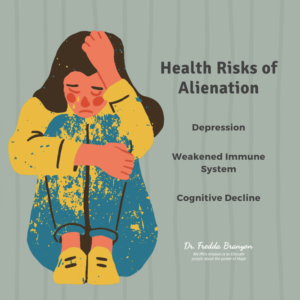
The introduction of the remote work setup is a double-edged sword. While it allows workers to work at the comfort of their home and avoid the risk of being infected with the virus, the same also exposes them to distractions, work-and-life imbalance, as well as feelings of alienation. As for the latter, such prolonged conditions may lead to different health problems, such as depression, weakened immune system, and even cognitive decline.
What is alienation?
In simple terms, alienation refers to a social and psychological condition where a person feels estranged or disconnected from himself, other people, and society in general. Think of it like the person suddenly finds himself stuck in a bubble alone. He’s separated from anyone and unable to make connections.
Among the commonsymptoms of alienation include feelings of isolation, lack of motivation, reduced or lack of empathy, disillusionment, and even self-estrangement.
Generally, there are many causes of alienation. Work-related causes are among the most common culprits. These could include a heavy workload, lack of time for oneself, lack of time to socialize, toxic co-workers, and big changes in one’s environment.
Consequently, since the introduction of the work-from-home setup is so sudden and unexpected, such a setup is expected to have a social and psychological impact on workers. At the same time, the lack of physical presence of other people can make the tasks appear more burdening and workers won’t have any avenue to destress and find their comfort.
Health Risks of Alienation
Depression
Without intervention, feelings of alienation could develop into psychological disorders, such as depression. Since feelings of estrangement could cause people to further withdraw from social relationships, the same makes them more vulnerable to negative emotions. Eventually, such emotions, when maintained for too long, could develop into depressive symptoms, especially in the absence of a support system.
Weakened Immune System
Emotions are deeply connected with our physical health. Consequently, the more negative emotions we hold, the more vulnerable our body becomes. In one particular study, researchers found that negative emotions, such as intense sadness, fear, or anger, cause a weaker immune response against disease.
Cognitive Decline
Manystudies have already been published indicating there’s a connection between social alienation and decline in cognitive abilities. The association is mainly anchored on the fact that loneliness and alienation often triggerunhealthy habits, such as consistent negative thoughts, poor sleep patterns, and even lack of physical activity. Overall, such habits contribute to cognitive decline.
Consult Your Doctor
Are you currently on a work-from-home setup? If you’re experiencing any of the symptoms discussed above, it’s best to visit your doctor and ask for a psychological evaluation. Talk to your doctor about your symptoms and behavioral patterns.
Many treatments fall under the umbrella of Complementary and Alternative Medicine or CAM. Some of the most commonly used CAM therapies include: Acupuncture Chiropractic Food counseling Herbalism Massa...
For many centuries, Thanksgiving has been considered a national holiday in the U.S. and Canada to celebrate the harvest and other blessings of the preceding year. The traditions behind it have evolved...
Polls in the United States and Europe revealed that half the population are more afraid of cancer than any other disease. Cancer is, after all, a life-altering event that can trigger a rollercoaster o...