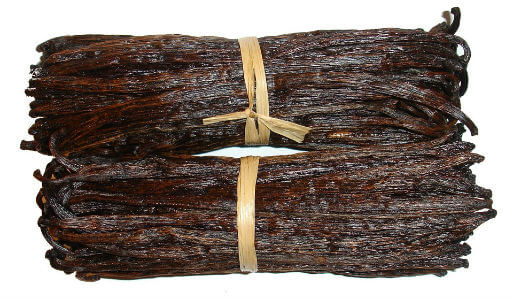
Vanilla oil contains a variety of health-promoting properties beyond its fantastic aroma and delicious flavor. Vanilla is a really sweet-smelling essential oil derived from Vanilla planifolia, which is a native species of the Orchidacease family. The word vanilla derives from the Spanish word vainilla, which means little black pod and is indigenous to Central America and Mexico. Finding pure vanilla oil in the market can be very time-consuming and confusing. The oil is classified based on the place of origin of the vanilla plant that was used, such as:
Bourbon vanilla from Madagascar
Mexican vanilla from Mexico
Tahitian vanilla from French Polynesia
West Indian vanilla from the Caribbean and Central and South American
The type of extraction method can also be used to identify the vanilla.
In Mexico during the time of the Aztecs, they were known to add vanilla to a drink they called cacahuatl, which includes cacao beans, corn, honey and chili peppers. Vanilla has been extensively used through the years in:
Cooking
Pharmaceutical and chemical industries
Perfumery
It has also been particularly useful in helping to improve one’s emotional and physiological health and well-being, when used in aromatherapy. The aroma can bring back good childhood memories.
Components of vanilla oil are vanillin and traces of other constituents such as eugenol, piperonal and caproic acid. About 150 different aromas are contained in vanilla oil in very small amounts.
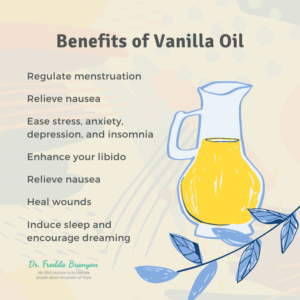
Benefits of vanilla oil are:
Regulate menstruation
Relieve nausea
Ease stress, anxiety, depression and insomnia
Enhance your libido
Relieve nausea
Heal wounds
Induce sleep and encourage dreaming
Using a potential fever reducer, vanilla oil can be included due to its eugenol and vanillin content. Also, vanilla oil is used for topical applications to help soothe burns, promote healthy skin and encourage hair growth, as well as a massage oil to reduce muscle or joint pain. There is a range of positive effects when vanilla oil is used in aromatherapy.
There is no toxicity known in vanilla oil. Beware, however, of products with lab-produced vanillin sold as pure vanilla oil by disreputable manufacturers. Some of the vanilla oil from Mexico may be mixed with tonga bean that contains coumarin, a harmful chemical that has been banned in food by the U.S. Food and Drug Administration.
Some side effects known from the use of artificial vanilla oil are possible allergy reactions such as headache or nausea. If any of these are noticed, discontinue its use immediately. Otherwise, love that delicious sweet smell!
Many treatments fall under the umbrella of Complementary and Alternative Medicine or CAM. Some of the most commonly used CAM therapies include: Acupuncture Chiropractic Food counseling Herbalism Massa...
For many centuries, Thanksgiving has been considered a national holiday in the U.S. and Canada to celebrate the harvest and other blessings of the preceding year. The traditions behind it have evolved...
Polls in the United States and Europe revealed that half the population are more afraid of cancer than any other disease. Cancer is, after all, a life-altering event that can trigger a rollercoaster o...