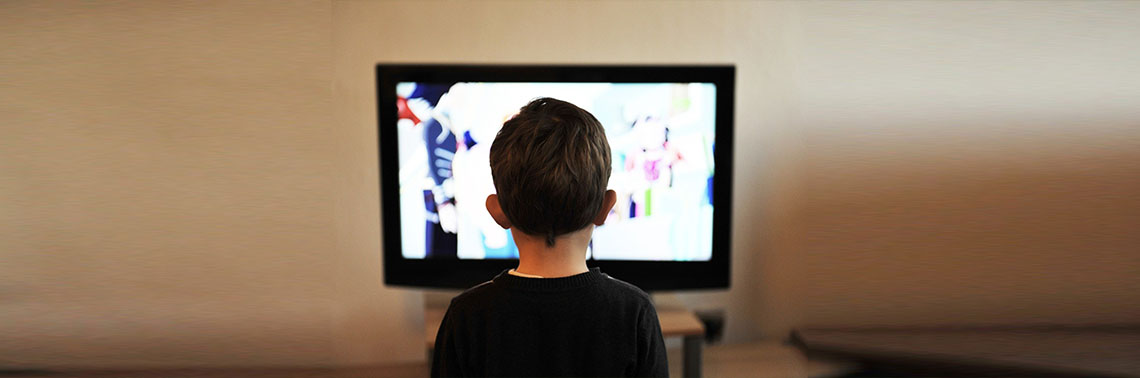
Steven Reinberg of HealthDay Reporter submitted an article on the effect that too much on screen time has on small tots. Not only small children, but even infants are watching those screens, and as they grow so does the time spent doing this.
It’s watching TVs, computers, smartphones, tablets and electronic games that occupies an hour a day of an infant’s time. This increases to more than 150 minutes by the time they are age 3, which is more than recommended.
It’s important to understand what factors play a role in forming these screen-time habits, as the exposure begins so early, according to lead researcher Edwina Yeung. Yeung is an investigator in the epidemiology branch of the U.S. National Institute of Child Health and Human Development. This awareness of its impact may help the parents to try new ways in restricting their child’s exposure. This can include discussing screen usage with their caretakers or with using technologies to track the screen time.
Data was collected on the mothers of nearly 4,000 children who answered questions about their child’s media habits that included ages about 1 to 8. It is advised by the American Academy of Pediatrics that kids under 19 months should not be exposed to screens at all. The screen time should be gradually introduced to children 18 to 24 months. It should be limited to an hour a day for those children 2 to 5 years old.
The team discovered that 87% of kids were glued to screens for a lot longer than that. When they reached ages 7 and 8 their screen time did decline to about 90 minutes a day. This is most likely due to school activities. About 73% of the kids screen time increased from an hour a day to nearly 2 hours. About 27% of the children’s screen time rose from 30 minutes a day to about 4 hours.
A lower level of parental education was tied to more screen time. Girls were less likely to use screens than boys, but first-time moms were more likely to use media a lot. Those children not attending a day care were more than twice as likely to have lots of screen time.
Reshma Naidoo, director of cognitive neuroscience at Nicklaus Children’s Hospital in Miami says that infants should not be exposed to screens in the first 18 months of their lives. Patience doesn’t develop and anticipation is decreased as screens offer a lot more spontaneous reinforcement. Guidelines are needed to help the parents integrate media into their kids’ lives for which are the best programs and what activities they can do with their child after watching a program or playing a game.
Another research shows that excessive screen time in preschoolers may be problematic for their development and parents need to be aware of guidelines and limit screen time. Home environment also plays a role. A child’s own parents’ media use impacts the children themselves for screen time. The child with a TV in the background constantly may be growing up in a very different environment and learning different lessons about using media than the child in a family where the TV is turned on and off selectively.
Many treatments fall under the umbrella of Complementary and Alternative Medicine or CAM. Some of the most commonly used CAM therapies include: Acupuncture Chiropractic Food counseling Herbalism Massa...
For many centuries, Thanksgiving has been considered a national holiday in the U.S. and Canada to celebrate the harvest and other blessings of the preceding year. The traditions behind it have evolved...
Polls in the United States and Europe revealed that half the population are more afraid of cancer than any other disease. Cancer is, after all, a life-altering event that can trigger a rollercoaster o...