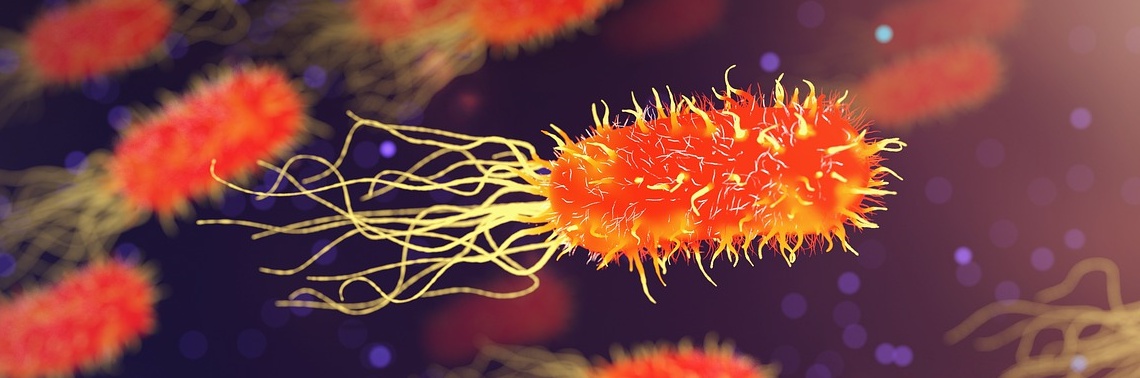
Listeria monocytogenes, which is a bacteria, can generate electricity. Electrons are transported through the cell wall into the surrounding environments by bacteria, using help from flavin molecules. Yasemin Saplakoglu is a staff writer with Live Science who explains how this happens.
Those sparks in your stomach aren’t butterflies. Some of the bacteria that are consumed or found already in our guts can create electricity. This was revealed through a new study that was published in the journal Nature. Electrogenic bacteria isn’t something new. They can be found at the bottom of lakes, according to senior author Daniel Portnoy, a microbiologist at the University of California, Berkeley.
Scientists had not discovered that bacteria found in decaying plants or mammals, especially farm animals, could also generate electricity in a much simpler manner. Portnoy and his team grew a batch Listeria monocytogenes. This is a species of bacteria that we often eat that can cause an infection called listeriosis. This is food poisoning which is typically most dangerous for those who have weakened immune systems. In pregnant women it can cause miscarriages and is dangerous also for newborns and elderly people, according the Center for Disease Control and Prevention (CDC).
The team found that by placing the bacteria in an electrochemical chamber and capturing the generated electrons with a wire or electrode, these food borne bacteria created an electrical current.
There are several reasons why some bacteria generates electricity, like removing electrons produced by metabolism, but the main purpose is to create energy. Listeria monocytogenes has other ways of generating energy. Using oxygen is one, said lead author Sam Light, a postdoctoral researcher at the University of California, Berkeley. The process is probably a back-up system they use under certain conditions, such as to deploy it in low-oxygen conditions of the gut.
They screened mutated bacteria of missing or altered genes, to identify which ones were necessary for bacteria to produce electricity. The genes in turn code for certain proteins key to producing the electricity. The bacteria used a cascade of proteins to carry the electrons out of the bacteria.
They found that bacteria needed flavin proteins to survive. A variant of vitamin B2 is a variant that densely populates the gut. Bacteria needs flavin to survive, but the extra free-floating flavin in the environment could enhance the bacteria’s electrical activity.
They further identified hundreds of other microbes that generate electricity using this simple process. Laty Cahoon and Nancy Freitag, who were not involved in the study and both from University of Illinois, microbiologists, say it is a shock to the system to consider that microbes might be living highly charged lives in our gut. This might create opportunities for the design of bacteria-based energy generating technology.
They have already strived to create microbial fuel cells, or batteries using bacteria to generate electricity using organic matter. Being a simpler process it might also improve technology, according to Light. Their focus is to understand what goes on in the gut and which molecules receive electrons from the bacteria and how the process affects bacteria survival.
Many treatments fall under the umbrella of Complementary and Alternative Medicine or CAM. Some of the most commonly used CAM therapies include: Acupuncture Chiropractic Food counseling Herbalism Massa...
For many centuries, Thanksgiving has been considered a national holiday in the U.S. and Canada to celebrate the harvest and other blessings of the preceding year. The traditions behind it have evolved...
Polls in the United States and Europe revealed that half the population are more afraid of cancer than any other disease. Cancer is, after all, a life-altering event that can trigger a rollercoaster o...